
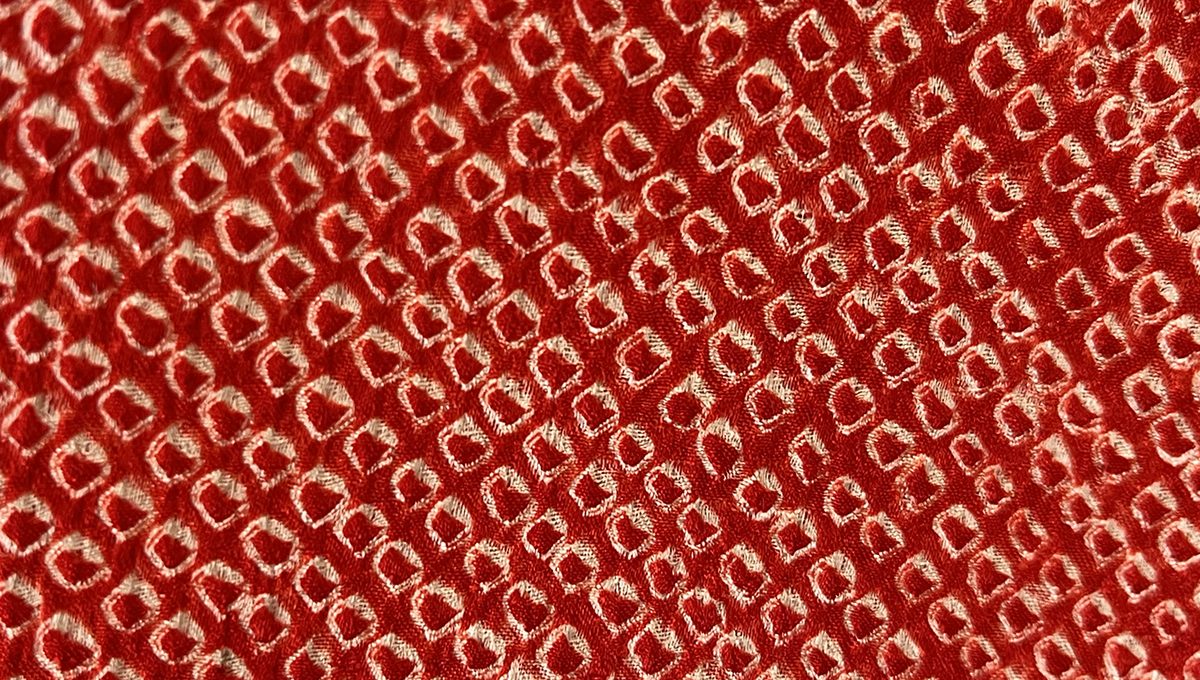
When it comes to kimono fabrics, there are two broad categories: dyed fabrics and woven-pattern fabrics. In dyed kimono fabrics, the base cloth (called shiroji) is woven first using white or undyed threads. Later, patterns and colors are added directly onto the fabric using various dyeing techniques. In contrast, woven-pattern kimono fabrics are made by dyeing the threads beforehand and weaving them to create the design as the fabric is produced.
This article focuses on dyed kimono fabrics, which highlight the painterly artistry and delicate craftsmanship of Japanese textile traditions. Let’s take a closer look at three of the most famous dyeing techniques: Yuzen, Katazome, and Shibori.
Yuzen Dyeing
Yuzen is perhaps the most iconic dyeing method for kimono. Originating in the 17th century, this hand-painted technique allows for extremely detailed and colorful patterns, often depicting flowers, birds, landscapes, and seasonal motifs. Artisans apply resist paste to outline designs, then brush vivid dyes into each section by hand. The result is a sophisticated, painterly look that has become synonymous with luxury kimono.
Katazome (Stencil Dyeing)
Katazome uses stencils (kata) to apply a rice-paste resist onto fabric. This technique makes it possible to reproduce consistent, repeated patterns with crisp edges. Once the paste is applied through the stencil, artisans brush or dip dye over the fabric. Katazome patterns often feature geometric motifs, nature themes, and symbolic images that convey meanings such as longevity, good fortune, or protection.
Shibori (Tie-Dyeing)
Shibori is a traditional tie-dye method, where parts of the fabric are bound, stitched, twisted, or compressed before dyeing. This creates distinctive patterns of dots, circles, and organic shapes with beautiful gradations. Each piece of shibori-dyed fabric is unique, and the technique has been used for centuries to decorate kimono with playful and artistic textures.
Learning about dyed kimono fabrics helps you understand the incredible artistry behind Japan’s textile heritage. From the detailed brushwork of Yuzen to the bold contrasts of Katazome and the organic beauty of Shibori, dyed kimono fabrics offer endless inspiration and a glimpse into Japanese culture’s enduring love for color and pattern.