
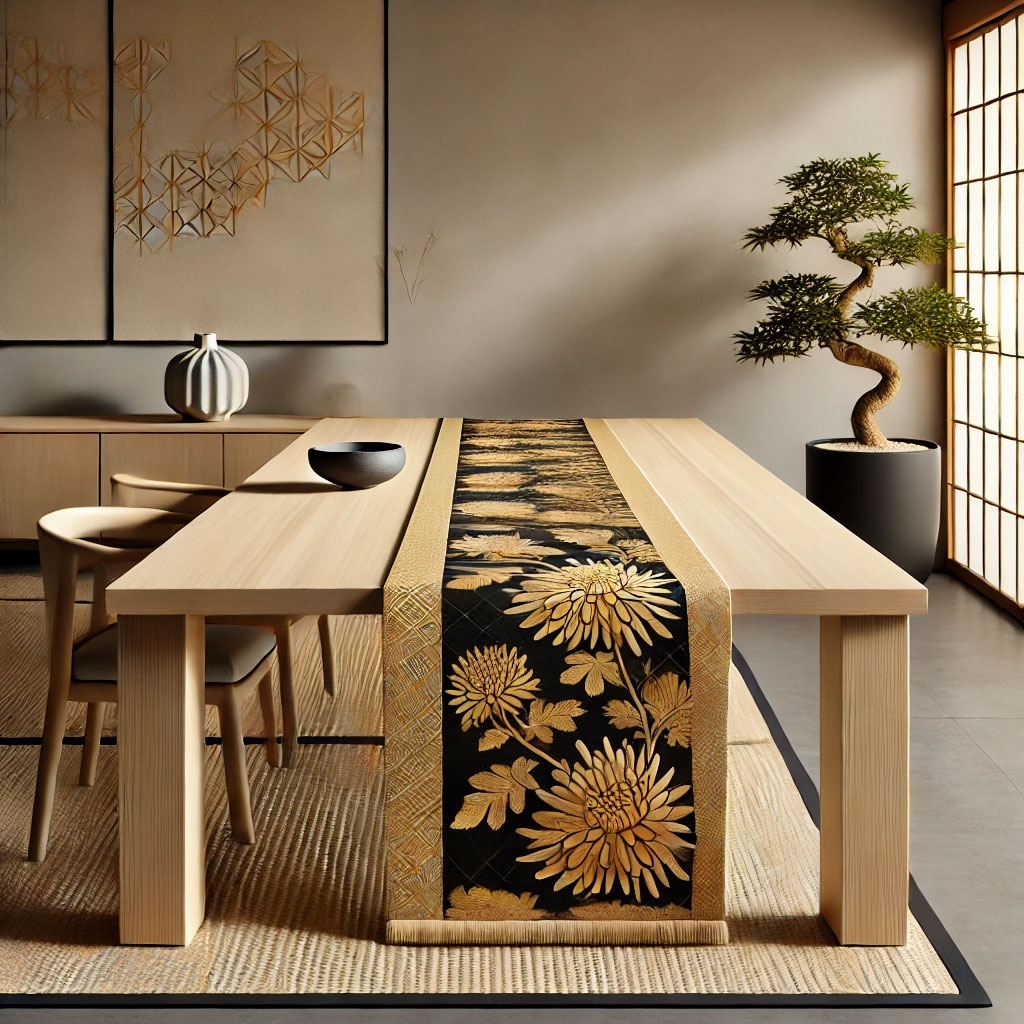
The Obi: Japan’s Timeless Sash of Art and Elegance
When people think of traditional Japanese clothing, the kimono is often the first thing that comes to mind. But just as iconic—and equally deserving of appreciation—is the obi. This wide, decorative sash is used to secure the kimono, often crafted from luxurious silk and woven with intricate designs. Beyond its practical purpose, the obi is a true piece of wearable art.
In recent years, creative minds have found new ways to give these beautiful textiles a second life. One of the most stylish and meaningful ideas? Using an obi as a table runner. It’s a stunning way to merge Japanese tradition with modern interior design. Here’s why this idea is gaining attention.
1. A Sophisticated Touch of Japanese Aesthetics
With its intricate patterns and rich textures, an obi instantly elevates any tablescape. Simply placing it down the center of your dining table transforms the atmosphere—adding a refined, unmistakably Japanese elegance. Whether it’s an everyday meal or a special gathering, an obi table runner becomes the centerpiece of conversation.
2. Sustainable and Culturally Meaningful
As kimono culture becomes less common in daily life, many vintage obis are now widely available—and often quite affordable. You can even find them online from Japanese shops. Repurposing these textiles allows you to embrace sustainability while honoring traditional craftsmanship. It’s a beautiful way to preserve culture through contemporary living.
3. Celebrate the Seasons with Subtle Beauty
Kimono and obi designs are deeply inspired by Japan’s four seasons. You’ll find motifs like cherry blossoms for spring, maple leaves for autumn, and snowflakes for winter—each adding visual depth and seasonal nuance. Switching out your obi runner throughout the year is a simple yet poetic way to bring the changing seasons into your home.