
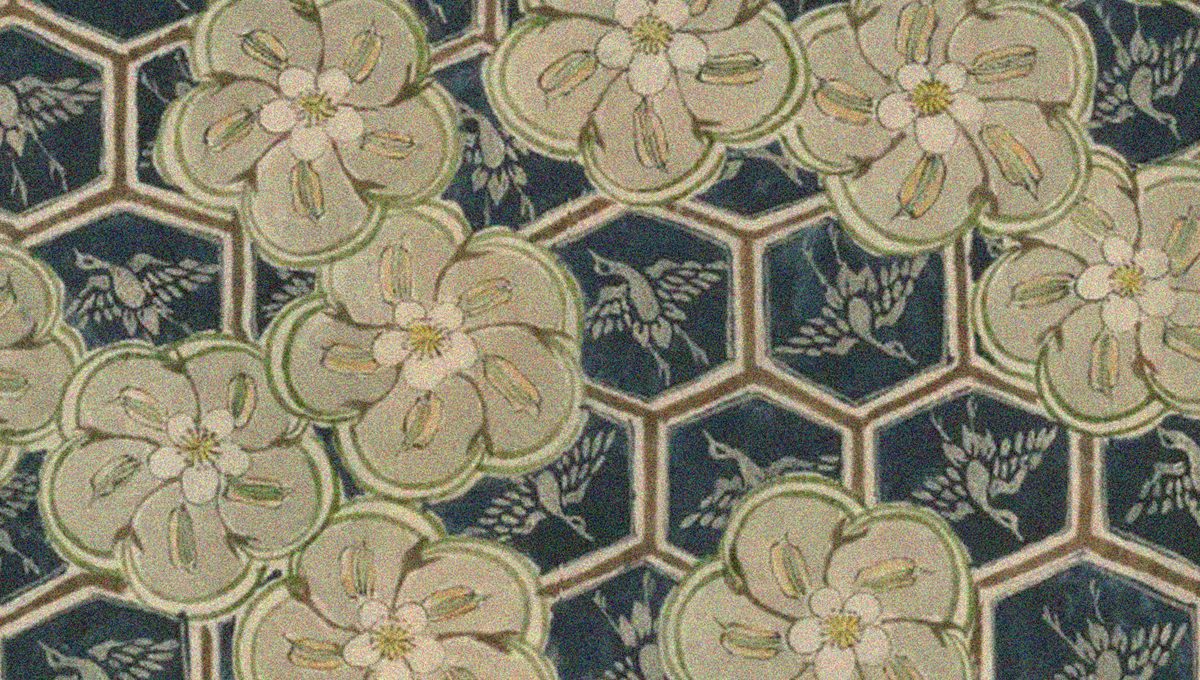
— When Japanese Tradition Met Global Design
The Taisho era (1912–1926) was a brief yet intensely creative period in Japan’s history.
Sandwiched between the rigid modernization of the Meiji era and the rising nationalism of the early Showa years, it was an age where liberal ideas, Western aesthetics, and urban lifestyle began to flourish—especially in art, fashion, and graphic design.
Amid this cultural awakening, kimono textile design underwent a revolutionary transformation. No longer strictly bound by nature-inspired motifs or symmetrical tradition, kimono patterns embraced modernism with bold abstraction, geometric composition, and international flair.
Urban Culture and the Global Flow of Ideas
During the Taisho period, Japan’s major cities—Tokyo, Osaka, and Yokohama—were booming. Cafés, department stores, and cinemas became cultural hubs for the new urban middle class, particularly women.
Western art movements like Art Nouveau, Art Deco, and Bauhaus made their way into Japanese publications, posters, and packaging.
Advances in textile printing and mass production made kimono more affordable and expressive.
Women, especially the modern “moga” (modan gaaru, or modern girl), used kimono as a way to express individualism and cosmopolitan identity.
Key Features of Modernist Kimono Patterns
1. Geometric Abstraction
Motifs such as waves, fans, and florals were transformed into stylized, abstract shapes—circles, rays, diagonal lines—often with rhythmic repetition.
2. Bold Composition & Color
Designs began to break free from symmetry. You’d see large-scale, asymmetrical patterns and surprising color combinations—deep purples, fiery reds, emerald greens—reflecting the energy of city life.
3. Incorporation of Western Icons
Umbrellas, roses, musical instruments, city skylines—these foreign elements were seamlessly woven into traditional textile formats, resulting in fascinating East–West hybrids.
The Meisen Phenomenon
One of the most iconic manifestations of Taisho modernism in kimono was Meisen, a lightweight silk fabric often dyed with resist-ikat techniques. Affordable and fashionable, Meisen kimono became the choice of modern women.
Highly colorful and visually loud compared to earlier eras
Patterns that echoed European graphic design
Often sold through department stores and catalogs, signaling mass-culture accessibility
Today, Meisen kimono are collected as vintage pieces and increasingly repurposed in contemporary fashion and interior design.
A Legacy Reimagined in Contemporary Art
Taisho-era kimono patterns are now being rediscovered as visual art. Their structure and spontaneity appeal to modern tastes, especially in minimalist or Japandi-inspired interiors.
・Ideal for digital reprints, framed art, and poster design
・Source material for textile design and surface pattern creation
・Culturally rich, visually balanced, and emotionally expressive
The fusion of Japanese heritage with early modernist ideals makes these patterns timeless—and increasingly popular with a global design audience.
Taisho modernism brought freedom, vibrancy, and global influence to the world of kimono design.
By stepping away from purely traditional aesthetics and embracing abstraction, boldness, and internationalism, these textile designs captured a unique moment in cultural history.
Today, adorning your wall with a print inspired by Taisho-era kimono is more than decoration—
It’s a quiet celebration of cross-cultural creativity, feminine agency, and the art of change.